Sand control chemistry for existing wells and fracs
SandWeb is a liquid sand consolidation chemical for existing producing wells and hydraulic fracturing. It increases the friction between sand particles so sand, proppant and fines consolidate into a web and stay in place, while minimizing the chemical impact on reservoir permeability. A cost-effective alternative to resin-coated sand.
- Where Stimulation of existing producing wells and hydraulic fracturing
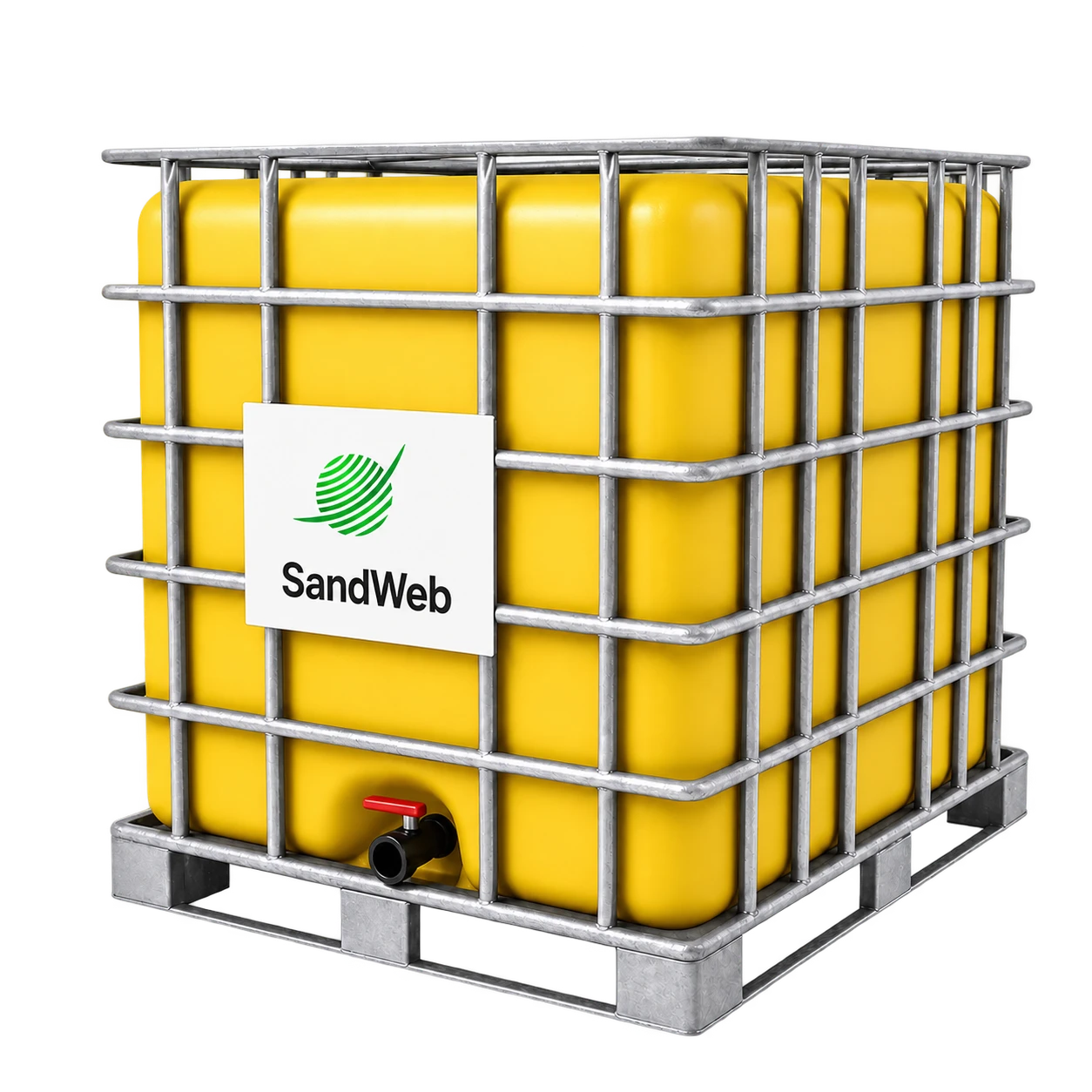
- Supply Available in 1000 L totes, shipped worldwide from Calgary, Alberta
How SandWeb works
As fluid flows to the wellbore, sand and fines disperse in it. They either plug pore throats in the formation or travel to surface, wearing pumps and chokes. SandWeb surrounds each grain to increase the friction between sand particles. Instead of dispersing, the particles consolidate into a web, while the chemical impact on reservoir permeability is kept to a minimum.
SandWeb is used in stimulation treatments of existing producing wells and in hydraulic fracturing for proppant flowback control.
Benefits of SandWeb
Sand flowback control
Operators have seen up to 90% less sand flowback.
Fines migration control
Keeps fines from plugging pore throats near the wellbore.
Flow preserved
Minimal chemical impact on reservoir permeability, so oil and gas keep flowing.
Less wear and downtime
Fewer cleanouts and less wear on pumps and chokes.
SandWeb vs resin-coated sand
| SandWeb | Resin-coated sand | |
|---|---|---|
| How it holds sand | Increases friction between grains to form a web | Resin bonds coated grains |
| Existing producing wells | Yes, as a stimulation treatment | No, frac only |
| Proppant | Works with the proppant you already use | Specialty coated proppant |
Presentation summary
01 · The hidden cost of sand
As fluid flows to the wellbore, it carries sand and fines that disperse in the fluid and either plug the pore throats in the formation or travel to surface, wearing down pumps and chokes, forcing cleanouts and cutting production.
02 · SandWeb changes the charge
Pumped into an existing well as part of a stimulation package, or with the frac fluid, SandWeb surrounds each grain to increase the friction between sand particles. Instead of dispersing, the particles are consolidated into a web while minimizing the chemical impact on reservoir permeability.
03 · Sand stays down. Oil flows.
The well can produce at its maximum potential. Oil flows freely through a stable, connected sand pack, with up to 90% less sand flowback, less equipment wear, fewer cleanouts and more production.
SandWeb FAQ
What is SandWeb?
SandWeb is a liquid sand consolidation chemical from Uniquem. It surrounds each sand grain to increase the friction between particles, so instead of dispersing they consolidate into a web, while minimizing the chemical impact on reservoir permeability.
Where can SandWeb be used?
In stimulation treatments of existing producing wells and in hydraulic fracturing, with the sand and proppant you already use.
How much can SandWeb reduce sand flowback?
Operators have seen up to 90% less sand flowback. Results vary by well.
Is SandWeb available worldwide?
Yes. Uniquem supplies SandWeb worldwide from Calgary, Alberta, in 1000 L totes.
Available worldwide
Uniquem supplies SandWeb to operators and service companies around the world. Talk to us about your wells and lab testing on your sand.